In response to a concerned traveler to Mexico

I recently received this letter from a concerned traveler:

Not to upset you, but we may want to really re-think our travel plans. We can’t change our flights but we may want to look at staying inside the US this trip. Safety and well-being of everyone has to be a high consideration. This is the latest report from the US State Dept. There are others. There are also great marketing reports about the area but getting to/from and safety of the kids while in the area should be re-considered. Don’t want to lose anyone or injure anyone because of some drug idiot doing something stupid. Where exactly are we staying? Hotel resort? Vans and SUV’s are targets according to another report.

This was the reply I sent:

I appreciate how you feel after reading this “latest report from the US State Department.” (Ref. Fig-1) You are not alone in your concerns regarding travel to Mexico. Many people have felt the same way as you do following the State Department Travel Warning that was issued on February 8, 2012. They wanted clarification as to where in Mexico they specifically needed to avoid, and verification regarding the incidents that were cited. I also felt that this warning from the State Department contained glaring inconsistencies and sensational statements that lacked verification. After speaking with State Department officials and representatives from law enforcement, I have a better understanding of what this advisory had tried to relate, and exactly whom it was written for (State Department personnel). Yet the US media wasted no time in extrapolating the document into a dire warning for the safety of tourists traveling to Mexico. Let me share with you the information I have found regarding this particular advisory.

The specifics of these extensive, generalized warnings have been the subject of extreme scrutiny and analysis every time they are published. Each region mentioned could be addressed, however, in the interest of brevity; I’ll stick to the warnings regarding Puerto Peñasco, located in the Sonora region of Mexico.

The map included with the warning is a matter of curiosity in and of itself. The warning reads “Sonora: Nogales and Puerto Peñasco are the major cities/travel destinations in Sonora –see map (PDF, 286 kb) to identify their exact locations” yet the map provided is nowhere even close to identifying the

Tuesday, September 4th, 2012
Posted in Mexico Travel | Comments Off on In response to a concerned traveler to Mexico

CEDO Environmental Contest winners put plan into action

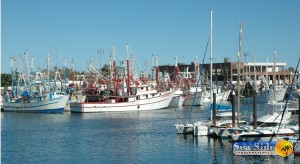
An armada of shrimping boats in the port of Puerto Penasco.

By Steve Schwab

The 2012 CEDO Environmental contest winners of “Team Los Delfines” have done more than identify the need for drastic changes in the fishing operations taking place in El Desemboque; they are sharing the information they have gathered with the fisherman of their village by organizing meetings and providing reasonable and amicable suggestions and solutions to concerns regarding the environmental and personal impact commercial fishing has had on their community. Since the early sixteenth century, most of the population of El Desemboque was involved with the extraction of the winged oyster (Pteria sterna), also known as mother-of-pearl oyster and black pearl oyster. The bivalve mollusk has been relentlessly exploited for its pearls, and less commonly for its meat and shell. Located in the upper Gulf of California, Mexico, in the state of Sonora, the village of El Desemboque faces several of the same tribulations plaguing the villages in Mexico that are reliant on Marine life for their livelihood, constantly struggling for a tenuous balance between economy and ecology.

With a strong desire to improve the economy of their village, while at the same time protecting the environment they live in, seven students from the sixth grade class of Himno Nacional Mexicano primary school, began to develop a project that would illustrate the necessity of improving the methods used in the gathering of the winged oyster, and to identify (through interviews) the concerns of the fishermen in regards to sustainability, job security and safety. Led by their instructor, the 11 and 12 year-old students collected data and gathered information from all sources, identifying six main issues impacting the future of oyster extraction in their region:

1) Improper handling of the shell and offal.
2) Not having effective cleaning of work areas.
3) No standards with regards to kilos per boat.
4) The over-exploitation of the product.
5) Not having a good pricing method of pricing product.
6) The lack of market for product.

From the outset, the students approached the subject with intensity and severity, concluding in their report “… without implementing sustainable fishing practices, the winged oyster could become extinct in our region, which would directly affect families residing in the community now and into the future, making the winged oyster fishery just a memory among the inhabitants…”

The results of their research was all encompassing, maintaining cautious optimism for the future of fishing, both for themselves in their hometown, and other regions of Mexico that rely heavily on marine life for their economy; while at the same time painting a dire picture of wonton exploitation of resources that coincided with an often careless disregard for human life as well.

The team’s work was awarded first place at CEDO’s 18th Environmental Contest. The parameters of the contest included economic viability while maintaining environmental sustainability.  Judges included fishermen in the region and fishing authorities working in the areas impacted by commercial fishing. For the first place team, CEDO participated in implementing the teams contest proposal, helping to devise a way to effectively promote the winning proposals that had been presented. Utilizing their suggestion of gathering the community together to try to reach agreements to solve the problem, El Desemboque’s proposal seemed feasible to carry out, having already demonstrated the ability to bring the fishing community together while gathering the research for their proposal. With the help from CEDO, the team will meet with local fisherman in order to come to a viable agreement in regards to:

1) Divers spending too much time under water, increasing the risk of fatal accidents that are leaving children fatherless.
2) The price of the winged oyster being very low due to fishermen not being organized, and bidding prices against each  other in order to make a sale.
3) Working together so that the fishermen will have one voice to the purchaser and maintain a reasonable price of the oyster.
4) Engage in fishing for other species, allowing the oyster population to recover between seasons.
5) Refusing to sell product to purchasers who do not respect the agreed-upon price.

The CEDO website summed up the results of the contest, and the winning team’s proposal the best, stating: “Perhaps someday, our children will be proud to tell the story of their community, how through agreements, discipline, righteousness, truth and unity, it was able to continue to fish responsibly and sustainably, co-existing with the unique and extraordinary animals of its environment.”

“CEDO” (from its name in Spanish, El Centro de Estudios de Desiertos y Océanos) opened its doors in Puerto Peñasco, Sonora, México, in 1980. Each year thousands of people participate in their research, education and conservation programs. CEDO maintains a biological field station for visiting classes and researchers. CEDO works with local communities, the government and visitors to understand and minimize the human impact on local environments and species. The mission of CEDO is “to advance and share knowledge about the Northern Gulf of California and surrounding Sonoran Desert and to promote the conservation and sustainable use of its natural and cultural resources.”

For more information, please visit the CEDO website at:

http://www.cedointercultural.org

Wednesday, August 29th, 2012
Posted in Mexico Travel | No Comments »

5.2 earthquake off coast of Rocky Point, no damage or injuries reported

The Malecon, on the coast of Puerto Penasco

By Steve Schwab

An earthquake measuring 5.2 was recorded off the coast of Puerto Peñasco Mexico this morning, there were no reports of injuries or damage resulting from the seismic event. The quake occurred at 5:22 am this morning with the epicenter reported 45 miles SSW of the coastal town. The quake was also felt 62 miles ESE in San Felipe Mexico, and 214 miles SSW in Phoenix, Arizona. The most severe reports of earthquake damage occurred in Brawley, California this morning, with an event striking near the center of the town at a magnitude of 4.9. Moderate structural damage has been reported, with products falling from shelves and some windows broken. Despite the magnitude and relative proximity of the town to the epicenter, no injuries or severe damage was reported. Brawley is a small farming town located 100 miles east of San Diego, California.

Residents of Puerto Peñasco reported experiencing mild tremors and shaking as a result of the quake, but there have been no reports of injuries or structural damage. “I was watching TV and it felt like someone suddenly moved the couch” reported one resident “Lots of people did feel it though.”A Tsunami warning had been issued by the NOAA’s National Weather Service for the coastal areas of Costa Rica, Nicaragua, El Salvador, Honduras, Guatemala, Panama and Mexico shortly after the earthquake was recorded, but has since been cancelled. As of this afternoon, there were no reports from city or state officials regarding damage or injuries directly resulting from the quake.

Puerto Peñasco Mexico is a popular tourist destination located south of Arizona. The coastal region experiences a large influx of visitors during the holidays, and is expecting one of the busiest Labor Day weekends on record.

Monday, August 27th, 2012
Posted in Mexico Travel | No Comments »

The Art and Architecture of Rocky Point

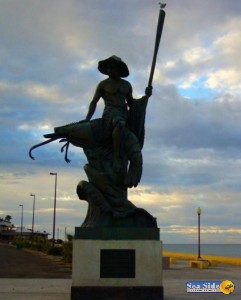
“El Pescador”

Rocky point certainly has it all. You can come down for the weekend and just relax by the beach for your entire visit if you desire. Or, perhaps you are looking for a weekend of sightseeing, exploring the historical architecture of Mexico. If you desire to simply enjoy a leisurely day while taking in the arts and culture of Mexico, you’ve come to the right place, for Rocky Point has some of the best art and cultural attractions in Mexico. Consisting of nine native cultures that are intermingled, yet retaining their own basic cultural differences, the art community of Puerto Peñasco has a long history of producing original and themed art. The creations by the local artists derive their inspiration from the natural elements around them: the ocean, the fishing and the landscape of Puerto Peñasco. The native Guarijíos are an artistic culture and make a variety of crafts including hats and figurines with natural materials such as palm fronds and clay. The Opatas, Papagos, Pimas, Seris, Yaquis, Cucapa and Kikapu are known for their variety of handmade baskets that are made from the materials found in the regional desert plants. Native art and handicrafts can be found throughout Puerto Peñasco. Walking through the

Wednesday, August 1st, 2012
Posted in Mexico Travel, Uncategorized | Comments Off on The Art and Architecture of Rocky Point

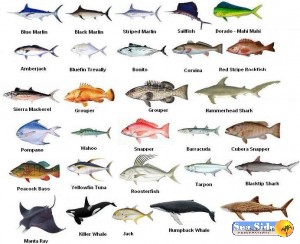
The complete guide to Rocky Point marine life.

By Steve Schwab

Fisherman often flock to Rocky Point, toss their gear in the boat and say: “Take me to the sharks!” It’s popular now, its exciting and its in style. I’m sure the Marlin population of Puerto Peñasco is quite relieved to learn that this oceanic predator has replaced them as the most sought after trophy fish. The Swordfish of the Sea of Cortez are also breathing a tenuous sigh of relief, getting bumped down the popularity scale while sharks of every size and species have become the object of fascination and speculation. While one marine species may be more popular than the other at times, the important thing to remember whether you are sport fishing in Puerto Peñasco or enjoying the experience of observing the sea creatures in their natural environment, is that there are still plenty of fish in the sea. In fact, there is a different marine species out there to suit every curiosity; from a blistering, wave riding battle, to a gently tugging delicacy lingering at the end of the line. Or, perhaps the slowly slithering crustaceans taking their time while seeking their next meal are more what you are looking for. The abundant marine life in Rocky Point provides both an excellent fishing experience and a rare opportunity to observe a vast variety of sea species up close.

From the sea to shore; what’s in store?

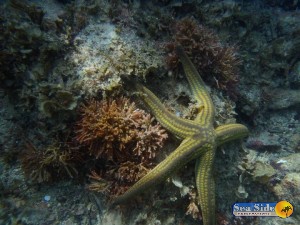
Visitors to Rocky point usually check in and drop their bags as quickly as possible before heading to the beach to peer into the clear water, to the creatures on the rocks, to the smooth sand and swimming fish. From the banks of Puerto Peñasco, gazing into the reefs and lagoons and tide pools, several species can be observed in their natural habitat. As the tide goes out, more species are revealed in the four tide zones; the first and most obvious are found in high tide (spray or splash zone). Here are observed several benign species that are exposed to the air 75-100% of the time. These species include buckshot barnacles, periwinkles and limpets. In zone two; (high intertidal or rockweed zone) reveals several species of crab and the turban snail. As the tide lowers to zone three (middle or midlittoral zone), hermit crabs, sea anemone and different varieties of starfish come to life. Zone four (lower intertidal zone) sees air less than 9% of the day and the sea life living there is mysterious and shy. Sea urchins, octopus and red abalone are now exposed, seeking shelter among the rocks and reefs while waiting for the water to return. Still below the water and cleverly camouflaged in the sand are Stingrays. Seaweed, surf palm and sea grass are also in abundance, depending on the tide.

Some of the marine life easily visible during low tide.

Where’s my fish?

Assuming you are still on the shore and the tide is safely back in zone one, you want to know what you’ll be able to catch just by fishing from the shore. Providing the seals and seagulls don’t steal your bait, cast out into the sea and prepare for a variety of species to show interest in your line. Late November is a popular time to hook Halibut from the shore, as well as Spotted Bay Bass and Leather Jackets. Although these are all still considered sport fish in the area, their usually smaller size makes them ideal for a leisurely day of shore fishing or just observing. Depending on the tides and seasons, other species can be encountered right from the shore, and often without live bait. Shortfin Corvina, Yellowtail and Black Skipjack frequent the waters near the shore depending on the temperature of the water. Some uninvited guests that may make a surprise visit include the poisonous Bullseye Puffer and the vile tasting Barracuda and Needlefish.

Sometimes, It’s what you can’t see…

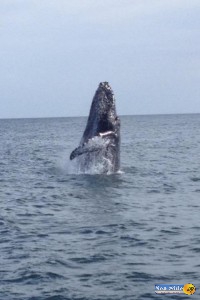
From the slowly trolling fishing boats to the speeding sports vessels that abound in these waters, the marine life differs vastly, depending on the depth of the water and the distance from the shore. The marine life in the Sea of Cortez has often been considered the best location for the greatest variety of marine life. After nearly being fished out towards the late 1980’s, the marine life around Puerto Peñasco has rebounded and redoubled, becoming more resilient and plucky. At the same time, restrictions and protections imposed upon the waters of the area have directly led to the re-emergence of several vanishing marine species. Marine biologists also flock to the “world’s aquarium” much the way the fisherman do; to observe and record a vast variety of species that often requires the exploration of several geographical areas, but is concentrated here into a relatively small radius. Deep within the waters lurk the creatures of legend, intrigue and mystery. Sharks swim slowly and silently in the warm water, while the highly desired Sailfish and Marlin fly through the air at the end of the test line. Dolphins playfully swim in abundance, often racing with the fishing boats. Majestic Humpback whales burst through the water and splash to the surface, putting on a show for those in attendance.

A Humpback whale emerges from the water.

Far below the churning blades and watchful eyes lies a fascinating undersea world. Pink coral reefs and waving sea fans entice scuba divers and underwater explorers. Gliding through the depths, the massive, lumbering Manta Ray passes by while silvery schools of Green Jack swim in unison. Fearsome looking Moray Eels jut from rocks and coral. Whether you are observing the marine life from the surface; gazing into a tide pool as the earths rotation reveals new and different creatures with each rising or lowering level, or you are swimming and snorkeling among the creatures far below the surface of the water, Rocky Point and the Sea of Cortez provide the most sought after marine experience, deservedly hailed has the “Worlds Aquarium.”

Marine life of Mexico

Some of the Marine Species found in the Sea of Cortez

Tuesday, July 31st, 2012
Posted in Mexico Travel | Comments Off on The complete guide to Rocky Point marine life.

The top time for fishing and boating in Rocky Point

For many years, the little village of Puerto Peñasco (better known as Rocky Point) Mexico was the Mecca for fishing and boating in the coastal waters of the Sea of Cortez. Local residents spent most of their time on the waters, scooping up marine life in relentless commercial fishing operations for shrimp and just about every species of fish that could be found. The nearly unlimited profit-making fishing operations subsequently led to the near complete elimination of the totoaba (or totuava), a huge relative of the white sea bass. At the same time, Rocky Point was inundated with an influx of sport-fisherman from Arizona and California during the 1950s and into the 60’s. Hordes of anglers flocked to the tiny coastal village to fish the waters for the weekend, some arriving by train for fishing excursions aboard enormous charter boats. Today, a concern for the waters and marine life around Puerto Peñasco has provided a respect and responsibility for the fishing and boating that visitors and locals still come to enjoy in Puerto Peñasco; ensuring the sport and recreational fishing in the crystal blue waters will remain for many years.

Listing the top places to fish and boat in Rocky Point is not an easy task. Because the water temperature changes as the seasons change, tides rise and fall and wave sizes and water conditions can change in an instant, its hard to say where the waters are always calm and where the big fish are always biting. The best thing to do is book your fishing charter well in advance. They will tell you when it is the best time to fish; usually based on the type of fish you are hoping to catch. All of the charter operators communicate with each other, and will keep each other up to date on where the best fishing is. Here is a basic rundown on what you can expect depending on where you go in Rocky Point to embark on the fishing adventure you have always wanted to experience.

The fishing that can be found in the waters around Rocky Point and the Sea of Cortez have proven to be quite resilient and prolific despite the alarming decreases they once experienced in their populations. Today, these once thinning schools are returning to abundance, providing very good fishing opportunities in the area to both experienced anglers and first time fisherman. As the fish species return to the area, the range of choices for angling becomes more abundant as well.

During the spring and summer, the “51-mile” reef found outside of Cholla Bay can provide some very good fishing action, most notably for red snapper, whitefish, halibut, and gold spotted bass, as well as some exceptional action when angling for black sea bass. During the winter months, desert-style winds sweep down from the north and drop the water temperatures down into the mid-50s. The drop in temperature and accompanying winds tend to make fishing at Rocky Point during this time of the year very difficult.

As late summer begins to raise the water temperature, the shallow water in the Sea of Cortez becomes the warmest, increasing to about 93 degrees with temperatures creeping even higher. Far to the south of Rocky Point, on the eastern shore that lies just south of Isla San Jorge, the late summer and early fall seasons increase the opportunity of catching sailfish, dorado and even marlin.

Although Rocky Point is probably best known for its thrilling boat fishing, fishing from the shore (beach fishing) around Rocky Point can provide an excellent opportunity to encounter small to medium-sized pompanos, corvine and other different species. As the surface water begins to warm beyond the optimum range, the water temperature usually peaks at around the end of May and then tapers off gradually. It is during this time that the inhabitant fish retreat to the cooler, deeper depths of the ocean.

In the shadow of a town experiencing massive growth from a growing vacation travel industry, with hotels and resort villas rising above the once sleepy little fishing village, the original tradition and feel of Puerto Peñasco can still be found, from the banks of its white sandy beaches to the deep blue waters of the Sea of Cortez, where sport and recreational fisherman continue to enjoy the excellent fishing opportunities that are available for the both the tourist and professional angler.

Saturday, July 7th, 2012
Posted in Mexico Travel | Comments Off on The top time for fishing and boating in Rocky Point

Sonoran Sky Resort hosts Las Vegas Night for Charity

This Saturday night, July 7th 2012, the spacious Sonoran Sky Restaurant will be transformed into luxurious and glittering gambling halls of Las Vegas as the Sonoran Sky Resort hosts their first annual “Las Vegas Night For Charity.” The event is taking place to raise money for the Puerto Peñasco DIF., a charity established in 1976 by the State of Sonora.

The semi-formal event (no shorts or t-shirts) kicks off at 7pm, when guests will arrive and partake in all of the accouterments of a Las Vegas casino. There will be plenty of opportunities to play Black Jack, Roulette and Texas Hold

Friday, July 6th, 2012
Posted in Mexico Travel | Comments Off on Sonoran Sky Resort hosts Las Vegas Night for Charity